Car Sort: Color Puzzle Level 228 Solution Walkthrough
Route Reference
Key opening, middle, and finish positions for this route.
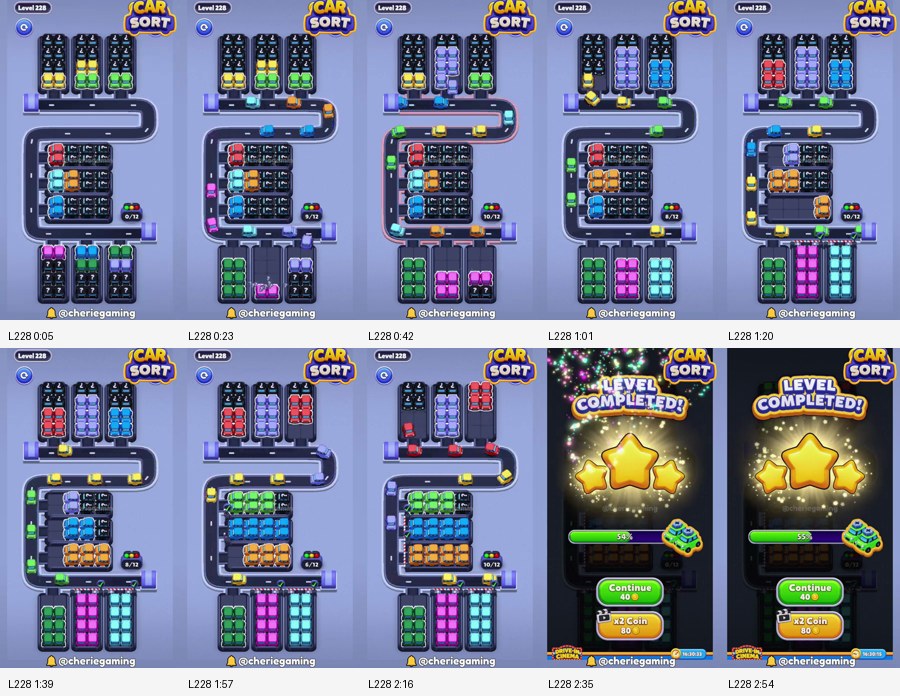
A Hooked Road Around A Compact Shelf Block
Car Sort: Color Puzzle Level 228 uses a long hooked road. Three towers sit above its upper arm, a compact block of short shelves fills the middle-left, and three reserve columns stand below. The road runs across the top, curves down the left, passes under the shelf block, and exits on the right. The center exposes red, cyan, orange, blue, green, and dark covered cars.
The top towers reveal yellow, green, pale purple, blue, and red. The lower reserves later become green, pink, and cyan columns. The correct route opens the upper hook, peels the center from its road-facing side, and saves the three lower columns for cleanup.
Recommended route:
top yellow -> top green -> top pale-purple/blue -> center red -> center cyan -> center orange -> center blue -> center green -> bottom green -> bottom pink -> bottom cyan -> final top red/pale purple
One color should own the hook at a time.
Establish The Upper Arm
Begin with yellow from the left top tower. Clear the visible layer and let the upper arm empty. Green follows, then pale purple or blue from the next tower.
Do not release a center red car while a top batch still rounds the left curve. The center mouth joins directly below it and can pin the top car.
Opening checks:
- yellow reaches its garage;
- green clears the upper curve;
- pale purple/blue completes;
- bottom counters remain closed.
If a top car stalls, finish its tower layer before touching the shelf block.
Peel The Center Block From Top To Bottom
Red is the first road-facing center color. Move red as one batch. Cyan follows from the next shelf, then orange from the deeper row. Blue and green are lower center bands and should wait until the rows above have opened the bottom route.
The route snapshots show the center changing from scattered colored ends into full green, blue, and orange rows. That clean-band state means the hidden layers have been resolved. Clear complete rows rather than opening more covers.
Shelf rhythm:
- finish red;
- wait for the hook to empty;
- clear cyan;
- move orange through an empty lower bend;
- finish blue;
- leave green until the center road is quiet.
If a cover changes color, pause. Complete the active road batch before tapping that shelf again.
Protect The Lower Hook During Long Rows
Orange, blue, and green each form longer center rows. They need the entire lower hook. Before starting one, inspect the right exit and bottom road. A single top or reserve car there can stop the row halfway through.
Send one long band continuously. Do not pause after a few cars to open a lower counter. When the row empties, allow the last car to clear the right exit before changing colors.
If orange and blue meet, finish the color farther along the hook. Then complete the other before green begins.
Open The Three Lower Columns For Cleanup
The bottom reserves settle into green, pink, and cyan. Start with the column whose mouth faces the empty lower road, usually green on the left. Pink follows after green clears, then cyan through the right exit.
For each counter layer, reveal the color, complete it, wait for the road to reset, and inspect the next front. Do not open all three columns to compare colors.
Late top towers may still hold red or pale purple. Return to them only after the center and lower reserves have stopped feeding the hook. Clear one tower through an empty upper arm.
Recovery And Completion Checkpoints
If the upper curve blocks, stop center and bottom taps and finish the active top color. If the lower hook blocks, finish the current center or reserve batch.
For mixed traffic:
- stop opening covers;
- identify the leading hook color;
- complete it from its current row;
- finish the second color;
- resume from the highest unfinished center shelf.
The three useful checkpoints are: upper towers shorten first, center rows resolve into red/cyan/orange/blue/green bands, and lower green/pink/cyan columns open after the shelf block quiets.
Avoid starting bottom pink while center green remains active. Both use the same lower bend. Finish green and let the exit clear before sending pink.
Separate The Three Cleanup Columns
Green, pink, and cyan form a visually simple lower bank late in the level, but their entrances are close enough to cause a final jam. Green should own the lower curve first. When its last car clears the right exit, pink can use the same route. Cyan should remain parked until pink has completely disappeared from both the bottom road and left hook.
If a column reveals a hidden layer after its visible color clears, do not continue automatically. The next color may belong after a different cleanup column. Leave it exposed, complete the planned neighbouring batch, and return when the hook is empty.
Use the top road as a secondary check. Late red or pale-purple cars from the upper towers can remain available while the bottom bank is active. Do not combine them with cleanup traffic. Finish all three lower columns first unless an upper car is already on the road.
After cyan, both the center block and bottom bank should stop feeding the hook. Any remaining top column then has a direct path. This clean separation is why the final upper red/pale-purple group can finish without needing a temporary buffer.
Level 228 is controlled by the hooked road. Top yellow/green opens the curve, center shelves peel from their road edge downward, long rows use the lower hook alone, and the three reserve columns wait for cleanup. Keep that progression and the final red, purple, pink, and cyan groups reach their garages without meeting on the bend.