Car Sort: Color Puzzle Level 266 Solution Walkthrough
Route Reference
Key opening, middle, and finish positions for this route.
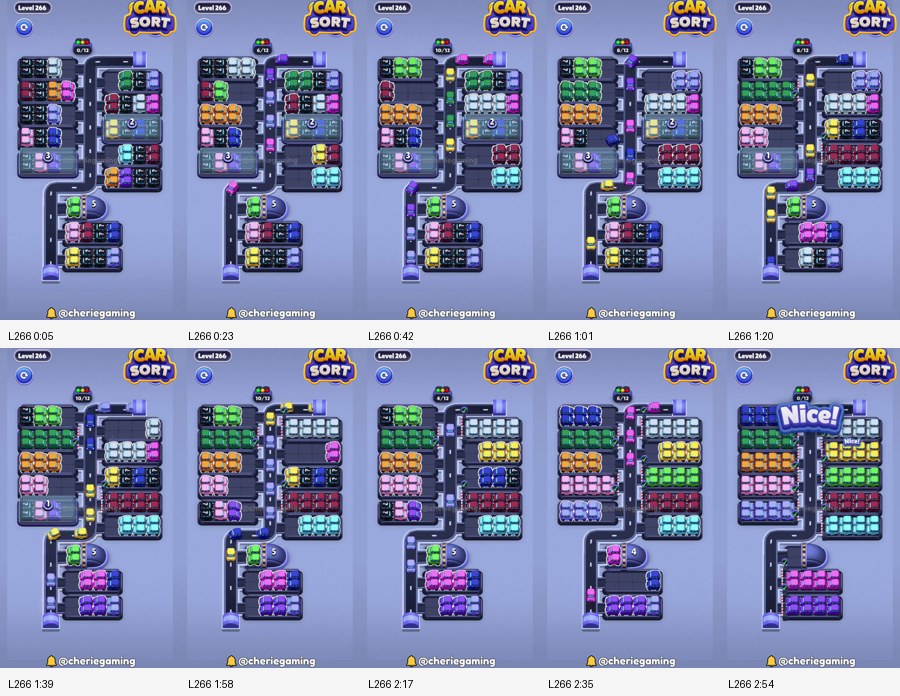
Mapping the three clusters
The upper-left bank contains white, orange, pink, blue, purple, and covered cars. The upper-right bank contains green, red, pink, pale violet, yellow, cyan, and dark groups. The lower bank contains green, pink, blue, yellow, purple, and white.
A vertical road runs between the top banks, bends left below them, then drops to the lower cluster. Every movement between clusters passes the middle bend. A car parked there isolates the bottom.
The counter holds twelve cars. Numbered rows can reveal several colors during the route, so preserve space before their counters finish.
Suggested route priority
Use:
green → orange → pink → white → cyan → red → yellow → blue → pale violet → purple → dark cleanup
Green opens visible rows in the upper-right and lower cluster. Orange clears a strong upper-left band. Pink then connects all three sections.
White and cyan simplify the right and upper-left shelves. Red and yellow release the deeper middle rows. Blue, pale violet, and purple are best after the connector is open.
Opening the upper banks
Start with green from the exposed upper-right row and its lower match. Complete one green group without opening the numbered lower row. Green's removal clears the right approach to the central road.
Orange follows from the upper-left bank. Its cars form a concentrated horizontal row and can travel through the top connector in one run.
Pink is visible in multiple clusters. Wait until the connector is empty, then combine the upper-left, upper-right, and lower sources. Do not park pink at the bend while searching for a hidden final car.
The first checkpoint is a top section with green, orange, and pink organized or removed, while the route down to the lower cluster remains empty.
White and cyan across the center
White becomes a strong group in the upper-right and appears in the upper-left progression. Complete it after pink so both sources can reach the same destination.
Cyan occupies the lowest visible right-side row. Its path uses the long vertical connector. Keep the lower bank quiet until every cyan car passes.
Removing white and cyan exposes red, yellow, and numbered rows. Do not tap all of them at once. Choose the color with enough visible matches to complete.
The replay's middle state shows clean white and cyan rows on the right and green, orange, and pink groups on the left. That arrangement leaves the center spine open.
Red and yellow release stage
Red is concentrated in the upper-right middle and may receive a match from a numbered row. Complete red first if the full group is visible.
Yellow appears in both the right bank and lower cluster. Wait until red clears the approach, then move yellow through the central bend as one sequence.
Numbered cars should be treated as finishing pieces. If a counter reveals blue while yellow is active, leave blue in the garage until yellow completes.
Reserve three spaces when a numbered row approaches release. The next car may expose another color immediately behind it.
Lower cluster timing
The lower bank should remain mostly closed during the opening. Its entrance is narrow and any waiting car blocks the road from above.
After yellow, complete blue from the lower and upper-left sources. Then handle pale violet, which appears in a lower or covered row and a right-side shelf.
Purple occupies deeper lower shelves and is a natural late consolidation color. Once blue and pale violet are gone, every purple source can meet through an empty connector.
White may recur as a separate lower group. If so, finish the complete late set rather than assuming it belongs to the earlier white group.
Final dark rows
Dark cars remain behind colored shelf ends and numbered covers. They look abundant in the opening but are divided among inaccessible rows.
Save them until the bright groups have cleared. Then move one dark shade at a time from the top banks to the open lower destinations.
The final board should display clean horizontal rows: blue, orange, pink, pale violet, green, yellow, red, white, cyan, and purple. Exact shelf placement can vary as long as the road is empty and each garage is uniform.
Recovery advice
If the middle bend is blocked, finish the color of the waiting car before moving anything from another cluster.
If the lower bank was opened too early, stop the top shelves and complete the lower color with visible matches. Reopen the connector before returning upward.
If numbered releases create too many colors, choose the exposed horizontal row with the most cars and finish it. Leave other revealed cars in place.
If pink is scattered across all three clusters, clear orange or green first to free the connector, then consolidate pink in one pass.
If red and yellow meet in the middle, finish red from its concentrated upper row before taking more yellow from below.
If you restart, use four checkpoints: green and orange open the two top banks; pink, white, and cyan clear the connector; red and yellow advance the numbered rows; blue, pale violet, purple, and dark cars finish through the open lower branch.
The Level 266 solution is a cluster-by-cluster route. Clear complete top rows, protect the middle bend, and postpone the lower bank until its colors can leave immediately. Controlled numbered releases then turn the three-part board into a sequence of clean shelf groups.